




Šiauliai streets tell their stories. Tilžės Street
Tilžės Street is the longest street in the city, extending from Ginkūnai settlement to Lieporiai residential area and reaching about 11 kilometres. The Riga-Tilžė Highway built in the middle of the 19 century did not change the previous city plan formed as early as in 1783. The route was built across the square to the north, towards Riga. This way, two perpendicular axes were formed in the city centre, consisting of the current Vilniaus Street and the section of Riga-Tilžė Highway, which became part of one of the main streets of the city. That section of the road was called Šoseinaja ulica (Plento Street). In the plan of 1852, it is recorded as Tauragenskaja ulica (Tauragės Street). The street was named Sobornaja ulica (Soboro Street) in 1867, when next to the already standing St Apostles Peter and Paul’s Church, the Orthodox church was built. This name remained until World War I. During the war, the street in the city territory was not long, but the Germans divided it into two parts: Mitauer Strasse (Mintaujos Street) going in the direction of Riga and Tilsiter Strasse (Tilžės Street) going in the direction of Tilžė. In 1924, the street became unbroken again and was given the name Tilžės. The street grew longer and its names were changing. After World War II, it was called Tarybų, a bit later, Lenino, and eventually, the name Tilžės was returned to it.
The Chocolate Museum
In 1913, Antanas Gricevičius, a former employee of Vilnius Chocolate and Sweets Factory, established the Sweets Factory Rūta. He bought a large plot of land in the city centre with a garden and a house where he set up a sweets workshop. The factory was founded with only five workers. A. Gricevičius made sweets himself and took care of product advertising.
In 2012, the Sweets Factory Rūta, which was attracting passers-by by the sweet smells of chocolate, caramel, roasted nuts and boiled berries for almost a century, opened the door of its old building to visitors. Namely here, in the old building of the factory, the Chocolate Museum of Rūta was founded.
The exposition of the museum does not only present the interesting history of the factory but also reveals the secrets and peculiarities of four millennia of chocolate consumption.
Julius Janonis Gymnasium
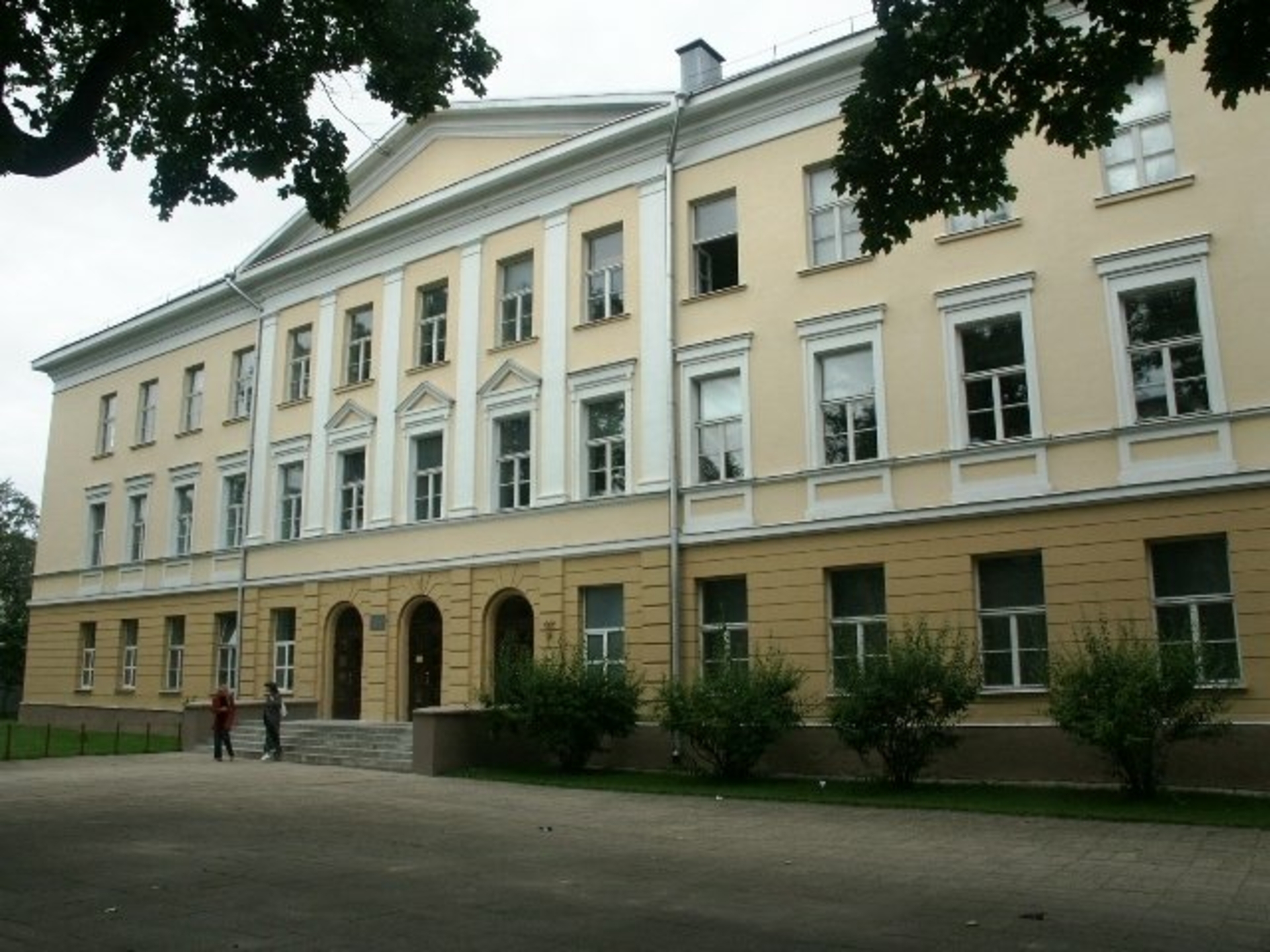
In 1838, first efforts were made to set up a gymnasium in Šiauliai. Two plots of land were purchased for this purpose. Landlord I.Vitkevičius agreed to demolish the abandoned Pašiaušės Jesuit Church that belonged to him and until spring of 1845, to take its bricks to Šiauliai for the construction of the gymnasium.
In 1851, the solemn opening ceremony of Šiauliai Gymnasium took place. From the establishment of the gymnasium until World War I, it was called Šiauliai Boys’ Gymnasium.
In 1946, it was given the name Julius Janonis. Since 1954, the gymnasium is both for girls and boys. In 1965, it was granted a status of a gymnasium with a humanitarian profile.
Stained Glass Saulės mūšis (The Battle of the Sun)
The stained glass Saulės mūšis is in the Concert Hall Saulė (the former cinema). Three of the second floor lobby walls of the Soviet architectural building were adapted for the stained glass.
The stained glass that is 3,8 meters high, 52,1 meters long and occupies the area of 200 square meters was unveiled in 1986 to commemorate 750 years’ anniversary of Šiauliai city.
It is an impressive and majestic piece of art, the first monumental work of art of such theme and scale in the country. The stained glass is dedicated to the fight of ancient Lithuanians, it reveals tension and dramatism of that fight. Visual and colour rhythm of the stained glass sound solemnly, like organ music.
The building with a spacious lobby in front of the audience hall and its three glass walls – one front and two side walls – determined the compositional structure of the stained-glass.
The author of the stained glass, artist Kazys Morkūnas aimed to symbolically and artistically give a sense to the Battle of the Sun, disclose fighters’ heroism, strength, and determination.
St Apostles Peter and Paul’s Cathedral
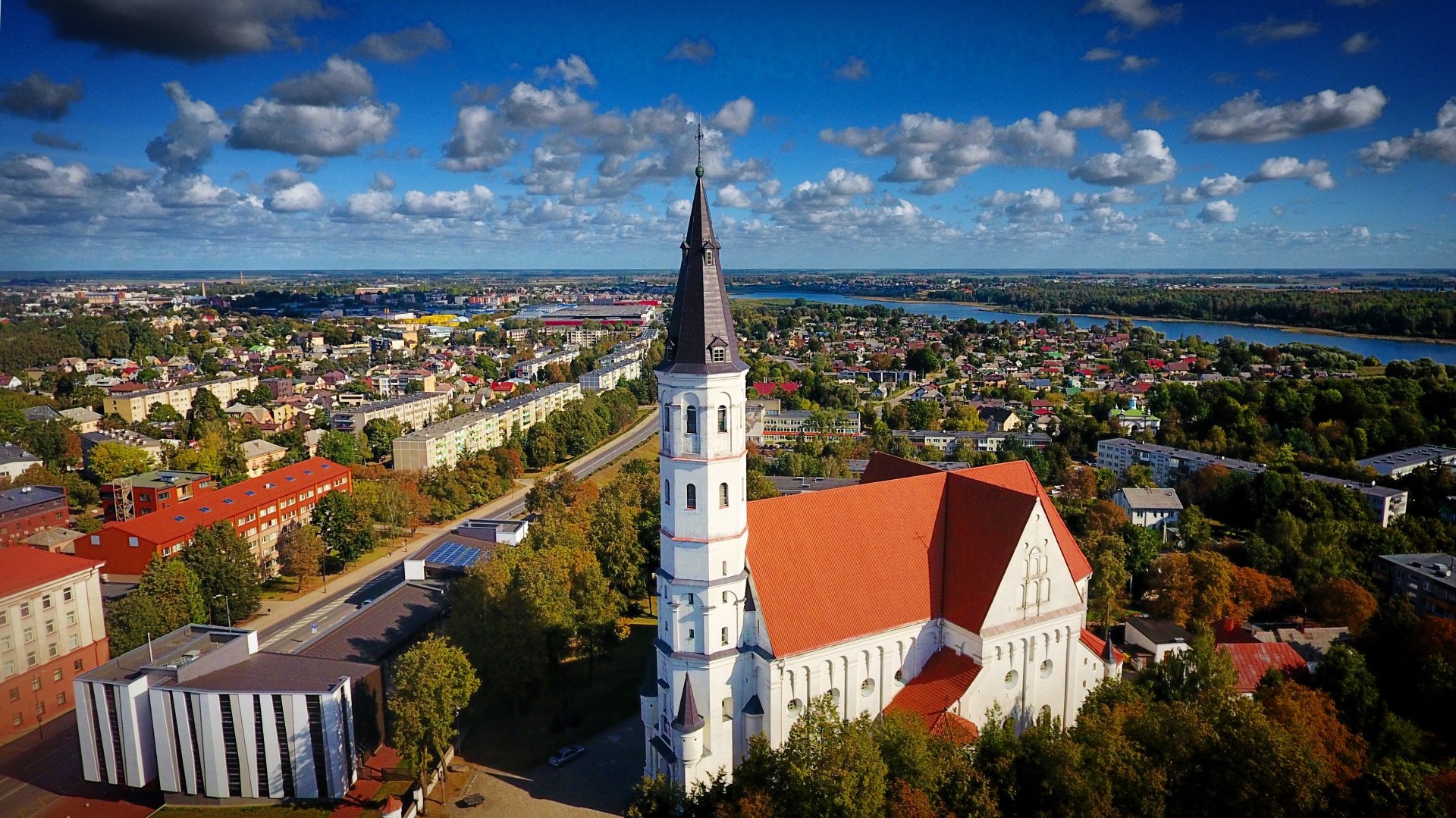
The monument of Renaissance architecture St Peter and Paul’s Cathedral is the city’s most striking landmark. It as if shows the visitor where the city centre is.
The cathedral does not only dominate due to its impressive height (the apex of the tower reaches 70 meters) but also because of its convenient and well-chosen location.
The construction of the new church started around 1617. It is considered that it was initiated by the Samogitian bishop Mikalojus Pacas, while the key sponsor was the governor of Šiauliai Crown Estate Jeronimas Valavičius. Construction works were led by the dean of the church, the graduate of Vilnius Academy Petras Tarvainis.
On October 8, 1634, the bishop of Samogitia Jurgis Tiškevičius consecrated the new church of Šiauliai. Thanks to these people, a meaningful epithet “the greatest in all Samogitia”, describing the beauty and majesty of the church’s architecture, was heard on the lips of the Samogitian bishop Motiejus Valančius in later centuries.
Interestingly, the church tower had a mechanical clock installed for the money of the city residents.
The image of the architectural monument of the 17 century slightly changed over time. Wars and storms devastated the church time and again. Every few decades the church was repaired, renovated.
Prisikėlimo Square (Resurrection Square)
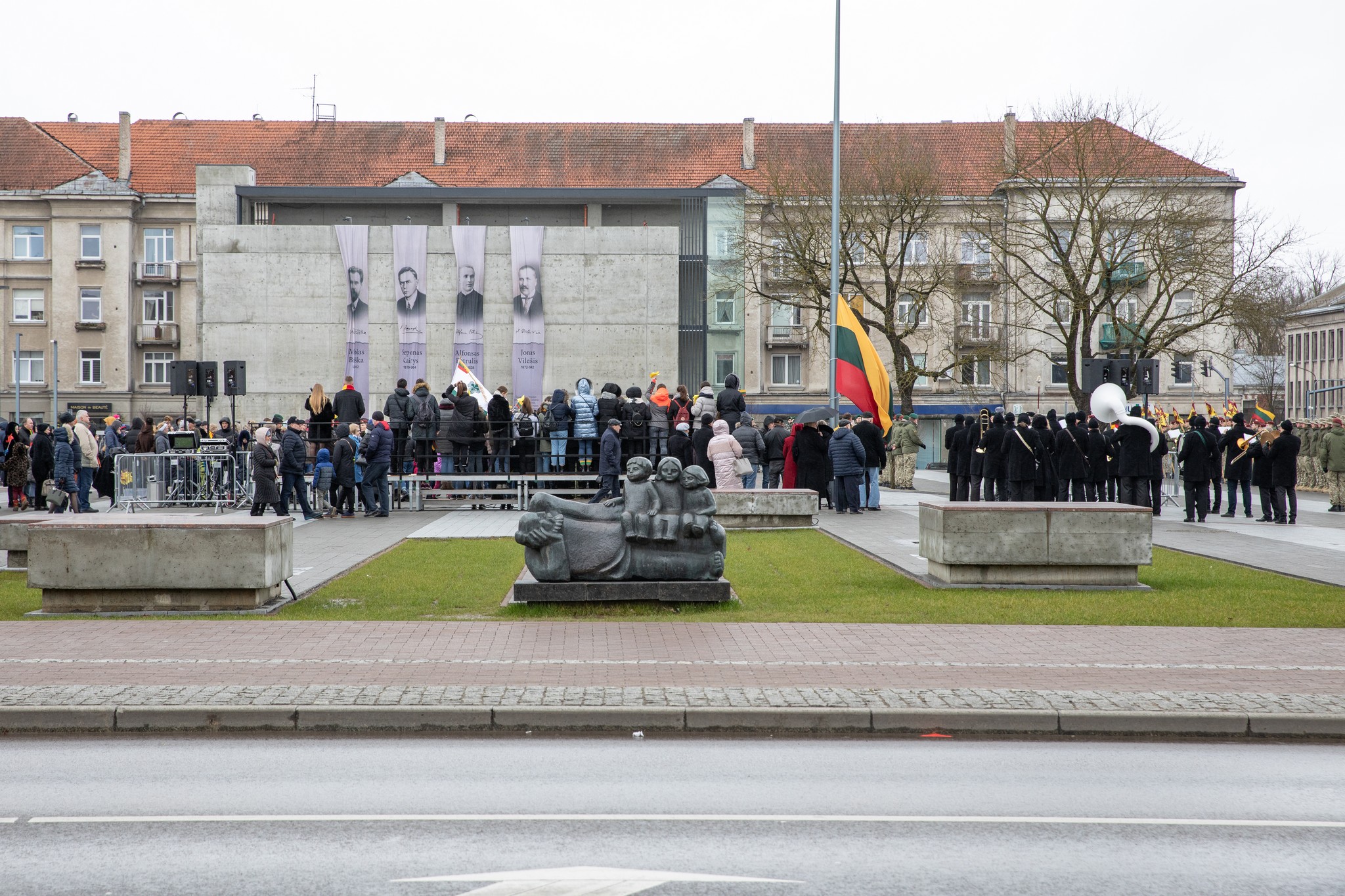
The central square of the city is divided into 4 parts by Aušros Avenue and Tilžės Street. This is the place around which the city of Šiauliai started growing. For centuries, the square was used for markets, fairs, live trading.
Interestingly, this oldest square of the city, the heart of the city, did not have an official name for a long time: it used to be called just Market, Market Square. Only in 1938, the square was assigned the name Laisvė (Freedom). In 1948, it was called Pergalė (Victory). In 1998, by the
decision of Šiauliai City Council, the city’s central square was labelled Prisikėlimo (Resurrection) in the honour of the Resurrection District of the Lithuanian partisans’ resistance, to which Šiauliai partisans also belonged. The square symbolizes the resurrection of the nation.
Leave feedback