



Šiauliai streets tell their stories. Višinskio Street
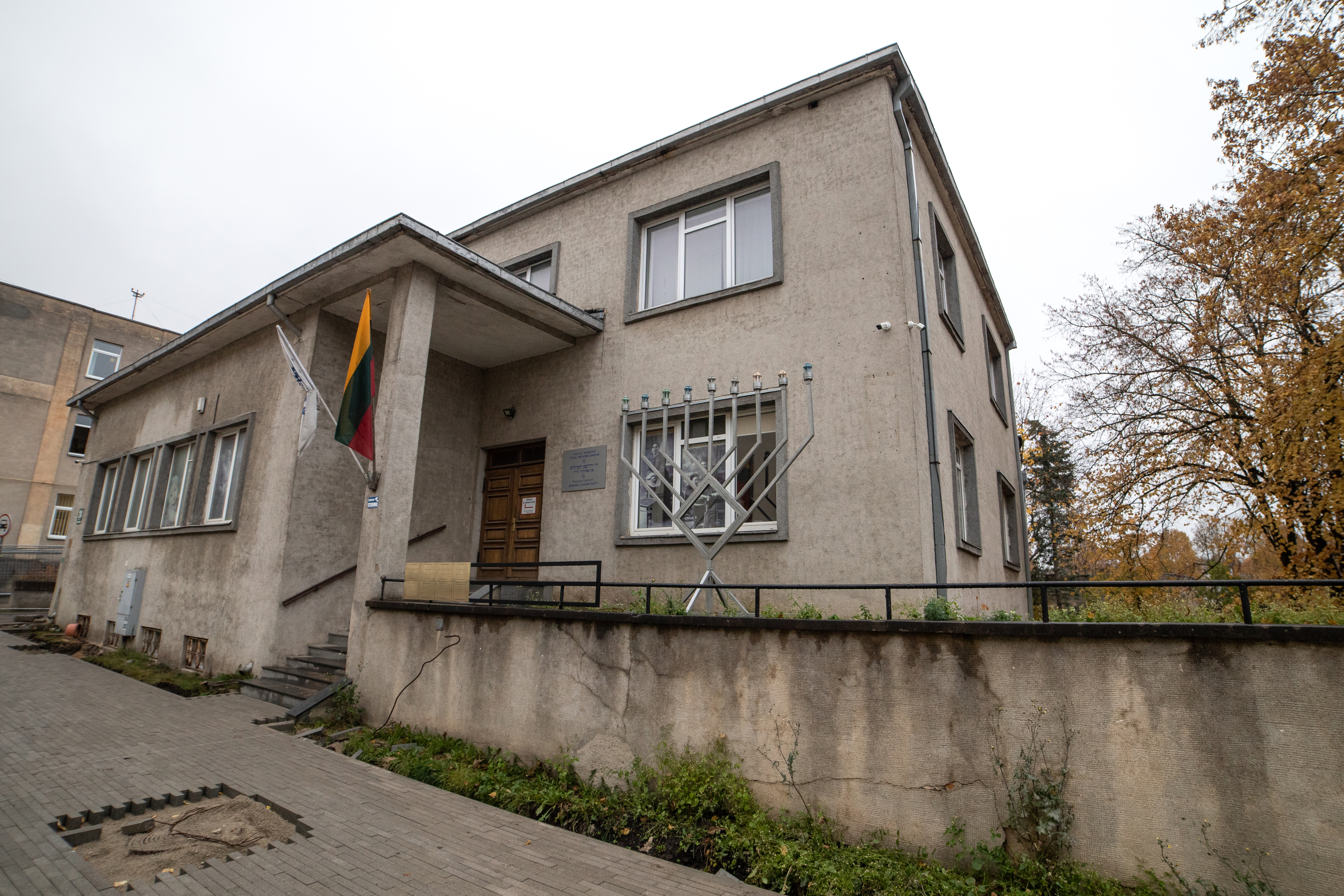
The name Lieparska ulica (Lieporių Street) is found in the city plan of 1852, and the street line coincides with the current P. Višinskio Street. In the design plan of the end of the 19 century, this street is already called Gornaja ulica (Kalno Street), and the name Gornyj pereulok (Kalno Alley) is mentioned in the press. The name took root and was used during World War I, it was only translated into German and the street was called Berg Strasse. After the war, the street had the Lithuanian name Kalno for some time. Since 1924, the street has been given the name of P. Višinskis, a public and cultural figure. During the Soviet period, it was given the name of the Russian writer Maxim Gorky. At the beginning of the revival, the name P. Višinskis was returned to the street. The street is interesting in that almost ten doctors of different fields lived and worked in it between the wars.
Juventa Progymnasium
Šiauliai city’s 12 secondary school with enhanced music education opened its doors for the first time on September 1, 1971. During the academic year 1999-2000, teachers chose a new name and it became Juventa Secondary School. Now, Juventa Progymnasium.
Until the end of the 8 decade, the school was experimental. Music teachers’ activities during the lessons and in artistic expression groups have always been the focus of the city, republic, foreign scientists, theoreticians-methodologists, music teacher practitioners, and other stakeholders.
In 1980, Vladimir Levin, the director of Moscow Central TV, taking interest in the musical life of Šiauliai city, made a documentary entitled “Daina lieka su žmogumi” (“The Song Remains with a Man”). The fragments of music lessons led by teachers E. Motuzienė, N. Valužienė, J. Lygutas were used in this film. In the 1990s, similar profile schools were legitimated in other cities and districts.
S. Volpertas’ Clinic. X-Ray Machine.
Between the wars, the doctor Simonas Volpertas lived on P. Višinskio Street. He had opened a private hospital for skin and venereal diseases in his house.
In order to maintain the confidentiality of the clinic’s patients due to the sensitive nature of health problems, the building was designed so that clinic visitors could not meet each other. S. Volpertas was one of the best specialists in skin and venereal diseases in Lithuania. It is stated that he was the first in Lithuania who acquired and used an X-ray machine in the clinic.
The Observatory on the Roof of Šiauliai Academy of Vilnius University
You don’t have to go to Molėtai at all to see what a real observatory looks like. In the very heart of Šiauliai, on P. Višinskio Street, a curious passer-by catches sight of the dome rising above the buildings of VU Šiauliai Academy and hiding a telescope of the university’s Astronomical Observatory. Due to not very favourable geographical location (anyway, it is the city centre), the observations take place mainly for training purposes. V. Jankus, the head of the Observatory of VU Šiauliai Academy, introduces to the constellations, celestial lights (planets, nebulae, star clusters, galaxies). It is also possible to view celestial bodies with a
telescope. You can even observe the Moon.
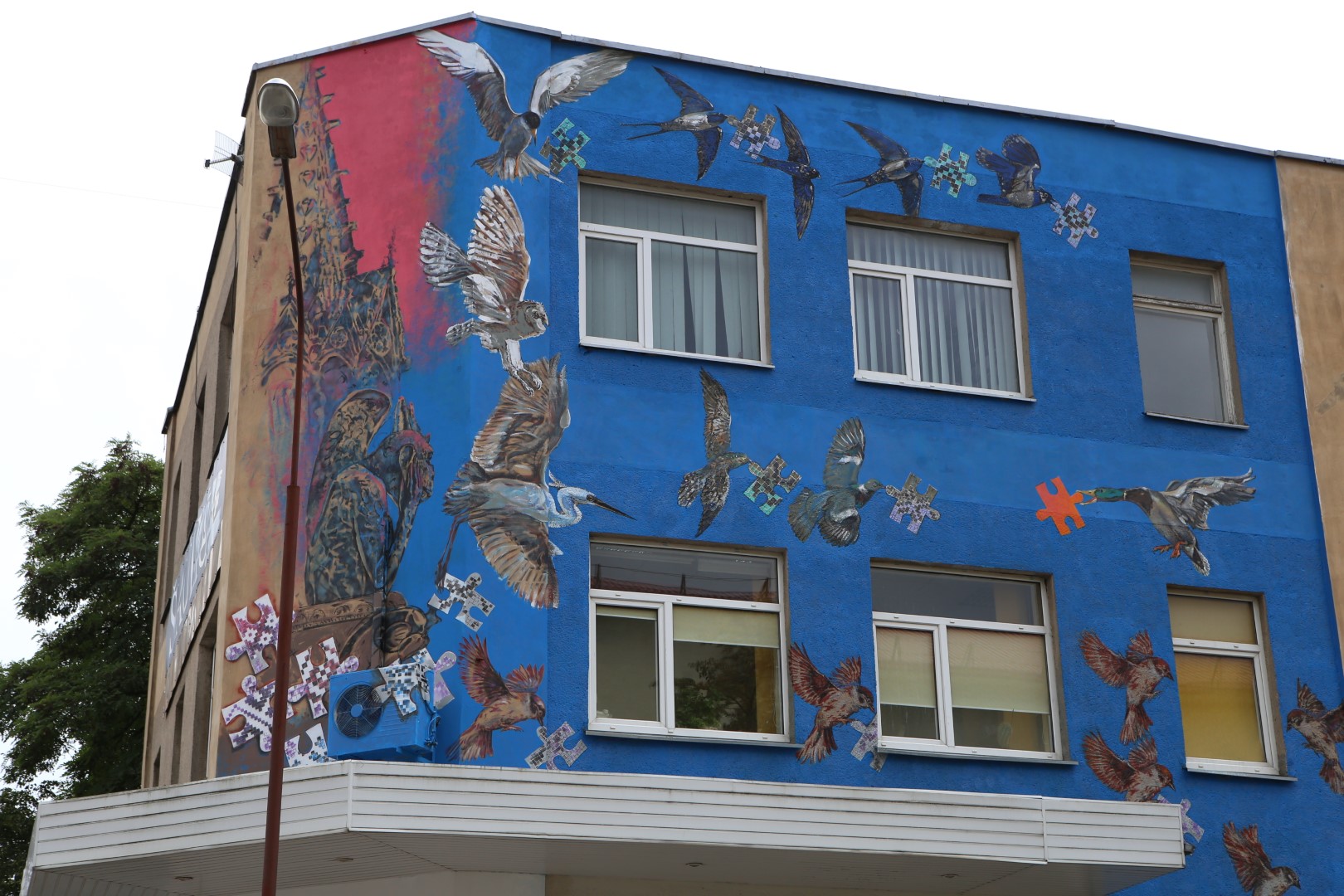
Graffiti Nešantys žinią (Carrying the Message). On the Wall of the Editorial Office of a Daily Šiaulių kraštas.
Šiauliai artists Reda and Arūnas Uogintai created a wall painting on the building of the editorial office of Šiaulių kraštas, called Nešantys žinią. According to A. Uogintas, the work of art symbolizes that information travels through the media. Notre Dame de Paris on the façade reminds that culture is the most important part of national consciousness, its essence. The birds give hope that pieces of the puzzle ornament can be assembled.
Leave feedback